Wash jars in dishwasher or by hand with hot soapy water. Then place them in the oven and when the beets are cooked, preheat oven to 250°F or 120°C.
Fill a clean sink with lukewarm water, add some salt, as this helps to remove the dirt from the beets and clean thoroughly and place your second sink with cold water for final cleaning, then place them in a large stock pot. I like to remove the tail and if there is any of the greens attached. Fill the pot with water, making sure the water covers the beets, and add the lid. Bring the water to a boil, and reduce to a low boiling point with the lid partially on. Allow the beets to cook for about an hour, and check with a sharp paring knife after 30 minutes. Once they start to get tender, and the knife goes in quite easily, then remove and drain in a clean sink or large colander. You don’t want them soft.
Sterile jars, place clean jars in a 250°F or 120°C oven for 20 minutes. To sterile lids in a small-medium saucepot with boiling water, leaving them in for at least 5 minutes. Then transfer them to the oven at 250° to dry.
Make the brine by adding vinegar, water, salt and sugar in a medium-large pot and bring to a boil. Then turn down the heat and keep the brine at a low simmer.
Once the jars have been in the oven for 20 minutes, then start adding the beets. Depending on the size, I will cut them in half or in quarters, and fill the jars just under the rim. Add the brine to each jar, making sure the beets are covered.
Add each lid to the jars and tighten and place them in the bath water, keep the water level about 1 inch from the top, just under the rims of the jars.
Bring the water to a low boil, and leave the jars in the bath water for about 10 minutes. Once you see the bubbles forming in the jars, you know that they have reached the appropriate temperature.
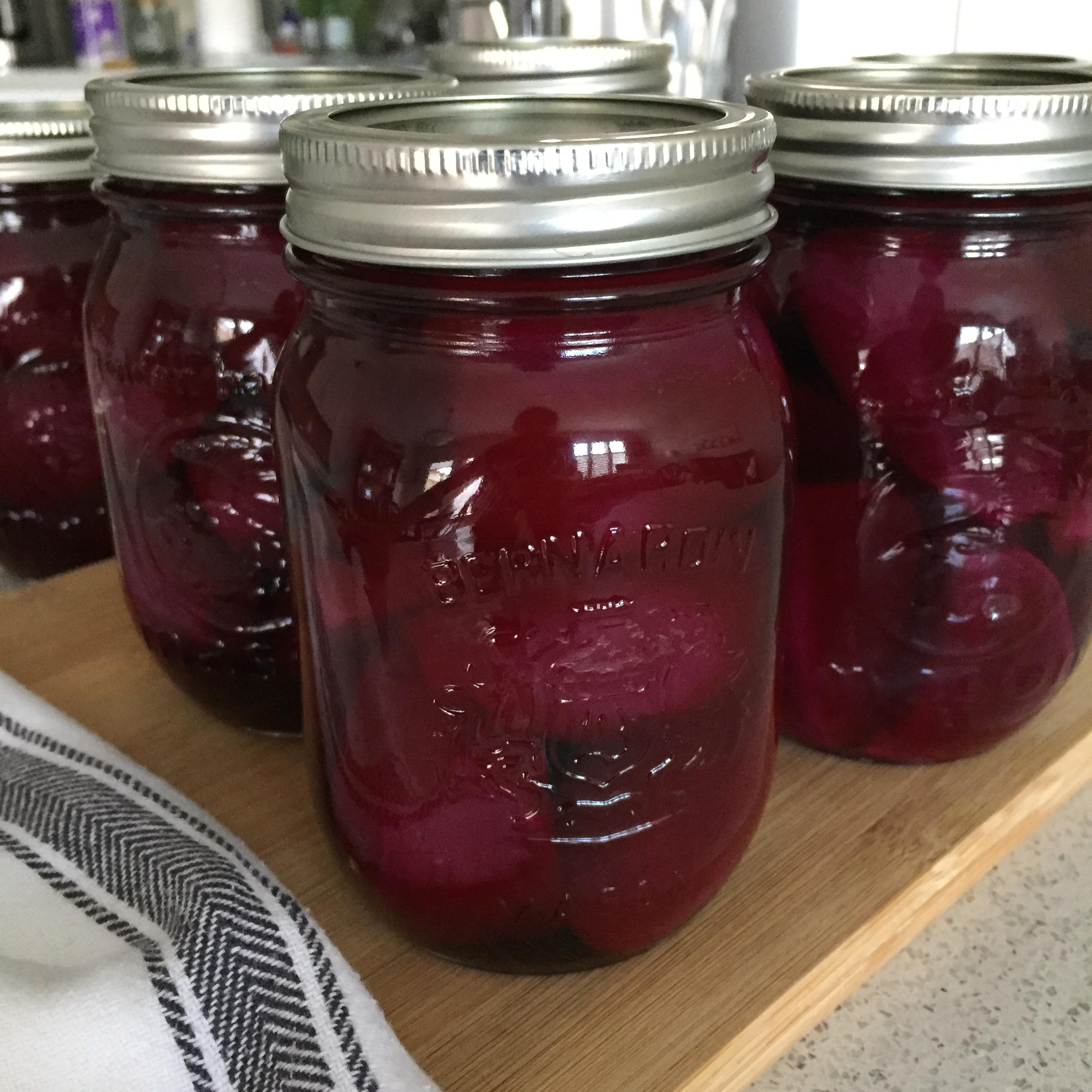
Using thick oven mitts or jar lifter, carefully remove the jars from the bath and place on a thick towel. Allow them to cool, and as they are cooling, you will hear the popping sounds and that’s what you want to hear to let you know the lids are sealed. Store in a cool dark room, preferably in the basement or cold cellar.